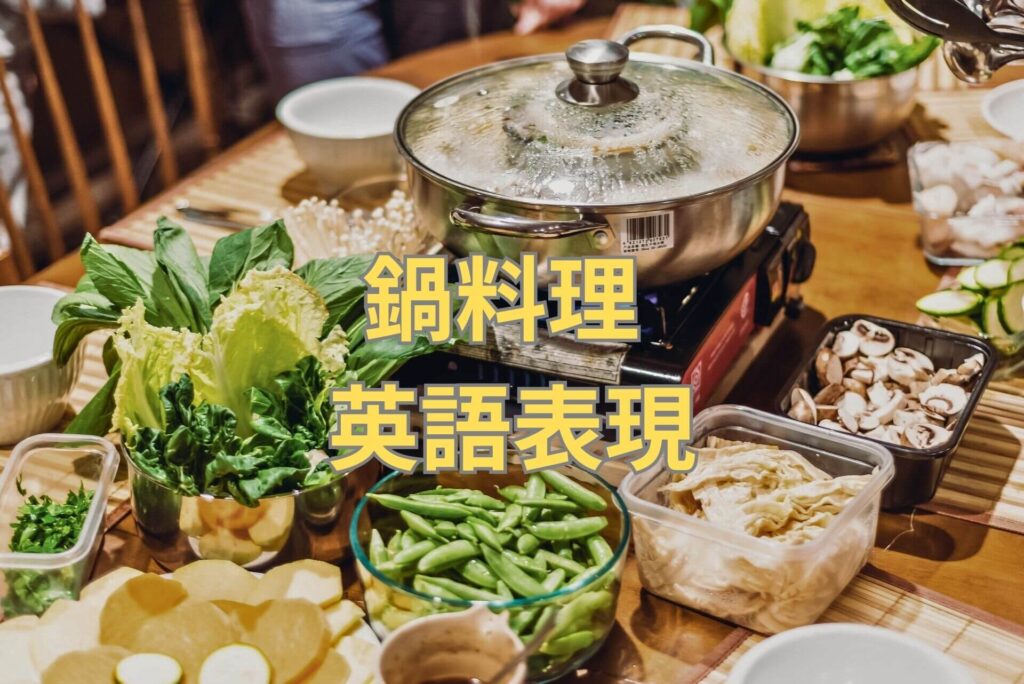
鍋料理 英語表現8選! 例文 会話例で学びましょう!
寒い時期に手軽で美味しい料理と言えば、鍋ではないでしょうか?家族の人数が多い人も、これなら準備も簡単で美味しく食べられ、体も心も温かくなるのではないでしょうか?
今回は「鍋料理 英語表現」をまとめてみました。
鍋料理 英語では?
鍋料理 英語表現
| 英語表現 | ニュアンス・意味合い | 使用場面 | 備考 |
|---|---|---|---|
| hot pot | 世界的に通じる「鍋料理」。中国火鍋を思い浮かべる人も多い。 | レストラン、日常会話、旅行中 | 一番一般的。日本の鍋を説明する時も使える。 |
| Japanese hot pot | 「日本の鍋料理」と強調。外国人にも分かりやすい。 | 観光案内、メニュー説明、紹介文 | 外国人に説明する時に安心して使える。 |
| nabemono | 日本語そのまま。和食文化として認知されつつある。 | 日本料理店、食文化の説明 | 外国人に通じるが、説明補足が必要な場合あり。 |
| one-pot dish | 「一つの鍋で作る料理」という直訳的説明。 | 料理本、ヘルシーメニュー紹介 | 日本特有ではなく、海外の料理にも使える。 |
| stew-like dish | 「煮込み料理に似ている」というイメージ。 | 日本食を知らない人への説明 | 海外の人にざっくり伝える時に便利。 |
| communal pot meal | 「みんなで鍋を囲む」という文化的側面を強調。 | 日本文化紹介、エッセイ | 食事のスタイルに重点を置く表現。 |
| tabletop hot pot | 「卓上で煮る」スタイルを強調。 | レストラン紹介、料理体験の説明 | 日本や韓国・中国のスタイルを伝えるのに便利。 |
| Japanese stew | 日本の「煮込み料理」と説明。シチュー感覚で理解しやすい。 | 日本食を初めて説明する時 | 簡単だが、日本的要素は薄れる。 |
鍋料理 英語例文
① hot pot
We had a delicious hot pot with vegetables and beef last night.
昨晩は野菜と牛肉の入った美味しい鍋料理を食べました。
Winter is the perfect season for hot pot.
冬は鍋料理にぴったりの季節です。
Let’s go out for a hot pot dinner this weekend.
今週末は鍋料理を食べに行こう。
② Japanese hot pot
Sukiyaki is a type of Japanese hot pot.
すき焼きは日本の鍋料理の一種です。
Many tourists try Japanese hot pot when visiting Japan in winter.
多くの観光客は冬に日本を訪れると鍋料理を味わいます。
Have you ever had a Japanese hot pot with miso soup base?
味噌仕立ての鍋料理を食べたことはありますか?
③ nabemono
Tonight, we’re making nabemono at home.
今夜は家で鍋料理を作ります。
Nabemono is very popular in Japan during the colder months.
鍋料理は寒い季節に日本でとても人気があります。
You can find many kinds of nabemono, such as shabu-shabu or chanko-nabe.
しゃぶしゃぶやちゃんこ鍋など、いろいろな種類の鍋料理があります。
④ one-pot dish
A one-pot dish is easy to prepare and share with family.
鍋料理は家族と一緒に作って食べやすいです。
Sukiyaki can be described as a one-pot dish.
すき焼きは一つの鍋で作る料理と説明できます。
This one-pot dish is healthy and full of vegetables.
この鍋料理はヘルシーで野菜がたっぷりです。
⑤ stew-like dish
Some people call hot pot a stew-like dish.
鍋料理を「シチューのような料理」と呼ぶ人もいます。
This stew-like dish is cooked right at the table.
この煮込み料理は食卓で直接調理されます。
A Japanese stew-like dish is often shared by everyone.
日本の煮込み料理は、みんなで分け合って食べることが多いです。
⑥ communal pot meal
A communal pot meal brings family and friends together.
鍋料理は家族や友人を一つにします。
In Japan, hot pot is often enjoyed as a communal pot meal.
日本では鍋料理は共同で食べる食事として楽しまれます。
The communal pot meal style makes the dinner more interactive.
共同鍋料理のスタイルは食事をより交流的にします。
⑦ tabletop hot pot
We enjoyed a tabletop hot pot with seafood.
私たちは卓上で海鮮鍋を楽しみました。
The restaurant serves a tabletop hot pot experience.
そのレストランでは卓上での鍋体験が楽しめます。
A tabletop hot pot keeps the food warm while you eat.
卓上鍋なら食べている間も料理が温かいままです。
⑧ Japanese stew
Chanko-nabe is sometimes explained as a Japanese stew.
ちゃんこ鍋は「日本風シチュー」と説明されることもあります。
Foreigners often compare hot pot to a Japanese stew.
外国人は鍋料理を「日本のシチュー」と比較することが多いです。
This Japanese stew is both hearty and healthy.
この日本の煮込み料理はボリュームがあって健康的です。
鍋料理 英語会話例
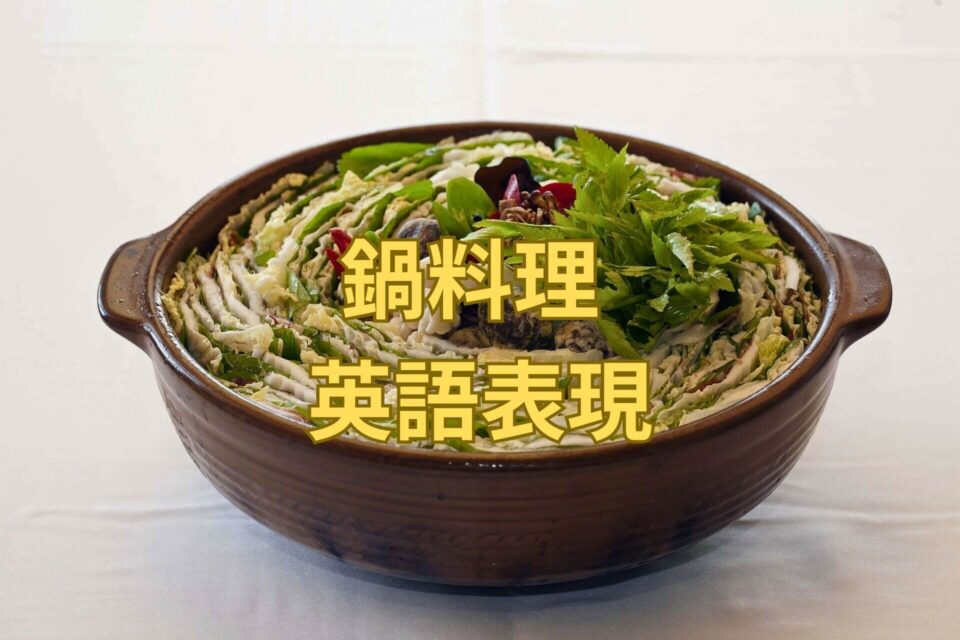
① hot pot
English
A: Have you ever tried hot pot before?
B: Yes, I love it! You just throw in vegetables, meat, and tofu, and it cooks right in front of you.
A: Exactly. I think hot pot is not only tasty but also fun because everyone can share from the same pot.
B: True, it feels like the perfect meal for winter. Maybe we should have hot pot this weekend.
A: Great idea. Let’s invite some friends too!
日本語訳
A: 鍋料理を食べたことある?
B: うん、大好き!野菜や肉や豆腐を入れるだけで、その場で煮えていくのがいいよね。
A: そうそう。鍋は美味しいだけじゃなくて、みんなで分け合えるのが楽しいと思うんだ。
B: 確かに、冬にぴったりの料理だね。今週末に鍋をしない?
A: いいね。友達も誘おう!
② Japanese hot pot
English
A: When foreigners visit Japan, many of them want to try Japanese hot pot.
B: Right, it’s one of the best ways to experience Japanese cuisine. Sukiyaki and shabu-shabu are famous examples.
A: I once took my American friend to a restaurant, and he said Japanese hot pot was the highlight of his trip.
B: I’m not surprised. It’s healthy, delicious, and a very social meal.
日本語訳
A: 外国人が日本に来ると、多くの人が日本の鍋料理を食べたがるよね。
B: そうだね、日本料理を体験するには最高の方法の一つだよ。すき焼きやしゃぶしゃぶが有名だし。
A: 以前アメリカ人の友達を鍋料理の店に連れて行ったんだけど、日本の鍋が旅のハイライトだったって言ってたよ。
B: それは納得。健康的で美味しいし、みんなで食べる料理だからね。
③ nabemono
English
A: Do you know what nabemono is?
B: Yes, it’s the Japanese term for hot pot dishes, right?
A: Exactly. There are many varieties of nabemono, like kimchi nabe, chanko nabe, and miso nabe.
B: I see. So nabemono isn’t just one dish but a whole category of meals.
A: That’s right. It’s one of my favorite parts of Japanese winter.
日本語訳
A: 「鍋物」って知ってる?
B: うん、日本語で鍋料理のことだよね?
A: その通り。キムチ鍋やちゃんこ鍋、味噌鍋など、いろんな種類があるんだ。
B: なるほど、鍋物って一つの料理じゃなくて、一つのジャンルなんだね。
A: そうそう。日本の冬で一番好きな部分のひとつだよ。
④ one-pot dish
English
A: I like making a one-pot dish when I don’t have much time.
B: You mean like a hot pot or stew?
A: Yes, exactly. It’s easy because you just put everything in one pot and let it cook.
B: That sounds convenient. A one-pot dish is also great for sharing, right?
A: Definitely, and it makes less mess in the kitchen too!
日本語訳
A: 時間がないときは一つ鍋料理を作るのが好きなんだ。
B: 鍋料理とかシチューみたいな?
A: そうそう。材料を全部鍋に入れて煮るだけだから簡単なんだ。
B: 便利そうだね。しかも一つ鍋料理ってみんなで分け合えるんでしょ?
A: もちろん、それにキッチンも散らからない!
⑤ stew-like dish
English
A: How would you describe hot pot to someone who’s never had it?
B: I’d say it’s a stew-like dish that you cook right at the table.
A: That makes sense. Unlike a normal stew, though, everyone participates in cooking and eating together.
B: Right, so it’s both a meal and a kind of social activity.
日本語訳
A: 鍋を食べたことのない人にどう説明する?
B: 食卓で直接調理する、シチューのような料理って言うかな。
A: なるほどね。でも普通のシチューと違って、みんなで作って一緒に食べるのが特徴だよね。
B: そうそう。料理であり、同時に交流の場でもあるんだ。
⑥ communal pot meal
English
A: I think a communal pot meal is special because everyone eats from the same pot.
B: Yes, it creates a feeling of closeness. You don’t get that with individual plates.
A: Exactly. That’s why families in Japan often enjoy nabe together in winter.
B: A communal pot meal really shows how food can bring people together.
日本語訳
A: 共同鍋料理って特別だと思うんだ。みんなで同じ鍋を食べるからね。
B: うん、親密な感じが生まれるよね。一人ずつ皿で食べるのとは違う。
A: そうそう。だから日本の家庭では冬によく鍋を囲むんだよ。
B: 共同鍋料理は、食事が人をつなげるってことをよく表してるね。
⑦ tabletop hot pot
English
A: This restaurant lets you enjoy a tabletop hot pot.
B: Oh, so the pot is placed right in front of you while you cook and eat?
A: Yes, that way the food stays warm the whole time.
B: That’s great. I’ve always wanted to try a tabletop hot pot with seafood.
A: Let’s order one today!
日本語訳
A: このレストランでは卓上鍋が楽しめるんだ。
B: へえ、目の前に鍋を置いて、調理しながら食べるんだね?
A: そうそう。だからずっと温かいまま食べられるんだ。
B: いいね。ずっと海鮮の卓上鍋を試してみたかったんだよ。
A: じゃあ今日頼もう!
⑧ Japanese stew
English
A: Some people describe sukiyaki as a Japanese stew.
B: That’s true. It’s easier for foreigners to understand that way.
A: But compared to Western stew, a Japanese stew uses lighter broth and more vegetables.
B: Yes, and people usually cook it at the table, which makes it different.
日本語訳
A: すき焼きを「日本風のシチュー」と説明する人もいるよね。
B: そうだね。そのほうが外国人には分かりやすいし。
A: でも西洋のシチューと比べると、日本の煮込みはスープがあっさりしてて、野菜も多いよね。
B: そうそう。それに食卓で作ることが多いから、また違った雰囲気になるんだ。
語彙力UP情報
・味 英語

コメント